

Question and Answer
| Q | A |
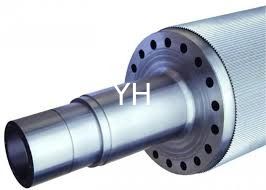
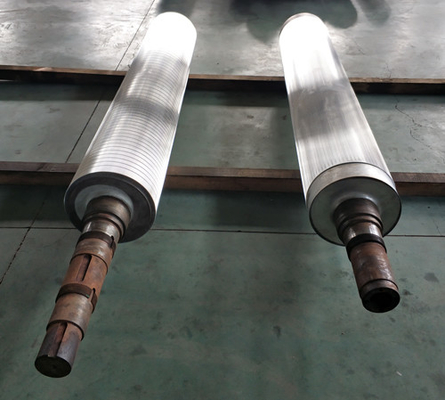
| How many times can the tungsten carbide rolls be regrinded? | 3-4 times |
| What's the warranty? | 8million meters |
| Which flute can be regrinded? | A, C, B, E, F |
| What's the lifetime? | It depends on flute, diameter, corrugated paper quality , machine performance, installment and maintainance. Generally it can reach to 8-15 million meters. |
| What kinds of corrugators do you supply corrugated rollers for? | BW PaperSystem, BHS, Mitsubishi, TCY, Taiwan Mingwei, Fuli, Wanlian, HSIEH HSU, K&H, Xinguang, Dpack, Shangyin, Shengli, Meiguang. |
| Did you regrind rolls for oversea customers? | Yes. We regrind corrugating rolls from Korea, Russia, Uganda, Thailand, Vietnam, India, Myanmar, etc. |
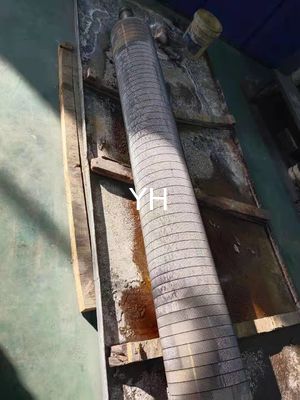
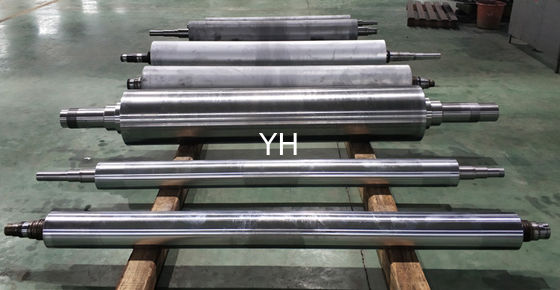
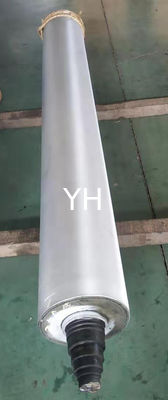
Customers choose us for maintenance for the following reasons: Our technology is already very mature and can fully meet the requirements of customers for the products; the cost performance is high, so customers choose domestic maintenance.
The repair process of our company is as follows:
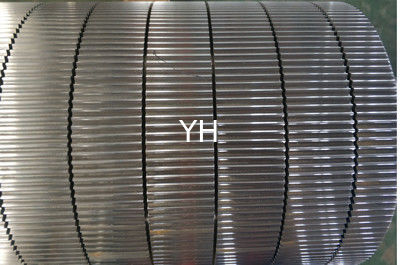
1.Inspection - After the product is returned to the factory, an appearance inspection is conducted, and then the original data on the product surface is compared. Based on the data differences, the product is re-designed with new data;
2.Customized tools - According to the new data design, the corresponding product data diamond wheels are purchased externally;
3.Surface treatment - During the product repair process, the old tungsten carbide coating on the product surface is removed first;
4.Grinding - After the externally purchased diamond wheels are delivered to the factory, a comprehensive inspection of the diamond wheel data is conducted. After confirming that there are no errors, the product is ground for the second time. During the grinding process, the surface of the workpiece is observed, and the processed data is measured to ensure it conforms to the design data. After confirming that there are no errors in the processing, it is transferred to the next process;
5.Preliminary test - After the workpiece is ground, a preliminary test is conducted to check the performance of the workpiece, including the applicability of the design data to paper, the coordination of the work between workpieces, and whether there may be abnormal phenomena during the use of the workpiece (such as abnormal vibration, abnormal noise, and power transmission loss);
6.Composite treatment - Workpieces that pass the preliminary test need to undergo hardness testing. Based on the test results, the appropriate power is selected for surface secondary hardening. The surface of the workpiece after secondary hardening is tested for hardness. Those that meet the hardness requirements are transferred to the next process;
7.Tungsten carbide spraying treatment - The corrugated rollers to be sprayed are first cleaned, then sandblasted, and after sandblasting, they are subjected to high-pressure sand cleaning and then sprayed with tungsten carbide in the tungsten carbide spraying room;
8.Post-spraying inspection - The sprayed workpieces are comprehensively inspected. After confirming that there are no errors, they are transferred to the next process;
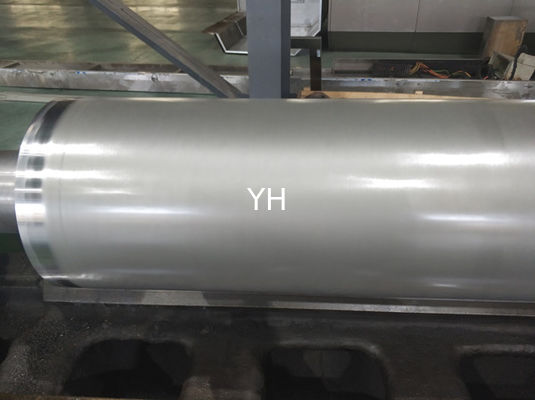
9.Polishing treatment - Ensure that the surface finish of the workpiece meets the usage requirements, and the finished product data is consistent with the design data;
10.Final test - After a series of processing, the workpiece enters the final test stage. This stage is jointly completed by the production department and the technical department. The workpiece is installed on the test equipment for calibration. After calibration, possible phenomena such as paper shredding, insufficient or excessive height, abnormal vibration, abnormal noise, and power transmission loss during the use of the workpiece are checked. After the test is completed, the workpiece is removed from the equipment and transferred to the final process;
11.Packaging - The packaging materials must meet export requirements. After packaging is completed, the workpiece is officially delivered.